
Tamil Nadu is leaving no stone unturned in marketing its upcoming global investors meeting on January 7 and 8. While business veterans are promoting the positives of the state's industrial climate through the 'Titans of Tamil Nadu" campaign, the state is narrating the human stories behind its robust industrial growth via the 'One Trillion Dreams' campaign. Among the industry bigwigs, who are showcasing Tamil Nadu to the world through this mega marketing initiative include Venu Srinivasan of TVS Motor Company, K M Mammen of MRF Ltd, Pratap Reddy of Apollo Hospitals, P R Venketrama Raja of Ramco Group, Mallika Srinivasan of TAFE; and Vellayan Subbiah of Murugappa Group.
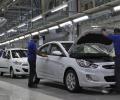
Major automobile manufacturers like Maruti Suzuki, Hyundai, Mahindra & Mahindra, Tata Motors and Toyota Kirloskar on Tuesday reported decline in domestic passenger vehicle sales in May compared to the previous month as a spike in COVID-19 cases and lockdowns across various states hit production and dispatches. The country's largest carmaker Maruti Suzuki India (MSI), which shut production from May 1 to May 16 so as to divert oxygen from industrial use for medical purposes, reported domestic dispatches to dealers at 35,293 units last month, down 75 per cent from 142,454 units in April. The company said sales of its mini cars, comprising Alto and S-Presso, declined by 81 per cent to 4,760 units in May as against 25,041 units in April this year.

From Hyundai to Tata Motors, automakers are staring at a bleak future. With no succor provided in the Budget, the pain for companies is likely to continue for the next two quarters.

Maruti, Hyundai, Tata Motors, Mahindra & Mahindra and Honda saw their passenger vehicle sales improve in August compared to the same month last year, although Ford and Toyota witnessed a decline.

Market leaders saw good traction for new cars, including the electric ones.

The dealers operating in the space have jumped nearly three times over the past two years.

Ahead of the peak festive season, India's passenger vehicle makers are staring at a cumulative order backlog of nearly 500,000 units as chip shortage continues to cripple production. The crisis is forcing companies to change their production plans frequently and take a call on the variants they can manufacture based on the availability of semiconductors. The booking numbers are not a true reflection of demand, said manufacturers.

Car sales are experiencing a challenging phase with around Rs 60,000 crore worth of inventory lying unsold with dealers.

The traffic tells a story. During the lockdown, it took 45 minutes to zip through the deserted 35-km stretch from Chennai to reach the automobile heart of Sriperumbudur-Oragadam, where the big names of the car industry - Hyundai Motor India, Renault-Nissan India, Daimler India Commercial Vehicles, Apollo Tyres, and Royal Enfield - are based.

Korea's second-largest automaker and Hyundai's sister company showcased a line-up of 16 models from its global portfolio at the ongoing Auto Show

The list clearly shows the dominance of Maruti and Hyundai in the Indian passenger vehicle market.

It manufactures cars ranging from entry-level hatchbacks to sedans to sport utility vehicles to vans to pick-up trucks. It also has a range of electric and hybrid vehicles

Almost all of these companies either unveiled their new electric vehicle or alternative energy-powered models.

Maruti Udyog Ltd has been rated the 'most trusted' passenger car company of the country, according to a survey by global research firm TNS.

China's biggest carmaker, which own brands like Maxus, MG, Roewe and Yuejin, plans to invest $1 billion in India manufacturing unit, reports Swaraj Baggonkar from Mumbai.

With the new Verna, Hyundai takes on Honda. Beating the Honda City is something the country's second-largest car maker has taken upon itself with its new launch. Will it succeed?

According to the latest data from SIAM, in the top 10 best passenger vehicles, Maruti's Alto retained the top position last month

While offering discounts of up to Rs 1 lakh, Hyundai, Ford and Honda are also hiking prices by 1-2% from January, Swaraj Baggonkar/Business Standard reports from Mumbai.

Maruti Suzuki India continued its grip in the passenger vehicles market in India with five of its models in the top ten best selling models in June.

Maruti Suzuki, Hyundai, Honda Cars and Tata Motors posted single digit growth during the period under review while M&M reported decline in sales.

Major automakers, including Maruti Suzuki, Hyundai, Tata Motors, Mahindra & Mahindra, Kia, Toyota and Honda, on Thursday reported healthy growth in passenger vehicles sales in June, recovering from the disruptions induced by the second wave of COVID-19. The country's largest carmaker Maruti Suzuki India (MSI) posted total sales of 1,47,368 units in June, up from 46,555 units in May. Its domestic dispatches to dealers last month stood at 130,348 units, up from 35,293 units in May, as easing of COVID-related restrictions helped the auto major to dispatch more units to dealerships.

In the next 2-3 years the company will pump in Rs 4,000 cr in product development, R&D and marketing infrastructure.

Vehicle sales across categories registered a decline of 8.62 per cent to 20,86,358 units from 22,83,262 units in May 2018.

Higher exports will also drive up volumes, as the company seeks to avail of the benefits under the government's recently announced production linked incentive scheme.

High ground clearance, a wide cabin and tall stance all mean that the Carens glides over bad roads with ease and comfort and an engine performance that is adequate in terms of the power of this vehicle, says Pavan Lall.

Several carmakers, including car market leader Maruti Suzuki India pulled the plug on diesel models citing higher costs for BSVI variants leaving buyers with limited options.

It is the global leader in car sales but in India, is a distant fifth.

The aim is to replace nearly 40 per cent of its existing last mile fleet of delivery vans with EVs by March 2020. o start with, the company is looking at deploying nearly 160 e-vans by the end of 2019.

The edge that Maruti Suzuki enjoys over Hyundai and other rivals stem primarily from its gigantic scale, reports Ajay Modi.

Seven auto companies lost share in the current year because of different reasons.
Japanese automaker Honda Motors is rolling out its small car in India by the last quarter of calendar 2009.

Apart from a pavilion of vintage cars, there will be a Bollywood corner

Carmakers usually come up with such year-end announcements.

Passenger vehicle wholesales in India increased by 17 per cent in the second quarter of the current fiscal year as buying sentiment improved and companies stocked up to cater to enhanced demand in the festive season, auto industry body SIAM said on Friday. According to the latest data by the Society of Indian Automobile Manufacturers (SIAM), passenger vehicles sales in the July-September quarter increased to 726,232 units from 620,620 units in the same period last year. Similarly, two-wheeler sales during the September quarter this fiscal rose marginally to 46,90,565 units as compared with 46,82,571 units in the same period last fiscal. However, commercial vehicles sales saw a dip of 20.13 per cent at 133,524 units in the quarter under review as compared with 167,173 units in July-September 2019.

In its first official engagement with the Indian government, Elon Musk-led Tesla and other global automotive (auto) manufacturers sought clarification on the new electric vehicle (EV) policy, specifically regarding investment guidelines and the timeline for the domestic value addition (DVA) requirement. Officials who attended the meeting told Business Standard that the original equipment manufacturers (OEMs) tried to understand whether the complete investment would be made within three or five years and the duration they would have to achieve the 50 per cent DVA. "The consultation meeting was convened to address queries from auto OEMs.

Companies also said confidence was yet to return among buyers, with many holding back their decision to buy cars.

Maruti Suzuki, Hyundai and Mahindra failed to register significant growth.

Passenger vehicle sales continue to drop in June; Maruti, Hyundai, Tata Motors, Toyota witness decline. Mahindra & Mahindra, however, reported a 4 per cent growth.

While customers in metro cities are still buying cars, quick growth is likely only from upcountry markets, where highways and roads are being built, and discretionary income and aspirations are rising.

Among the key concerns of the Street is market share losses in growth segments, led by higher competitive pressures.
